
Storm season, read carefully
Why Waffle House became a storm season signal
During hurricane season, local newsrooms and emergency officials sometimes mention a restaurant chain when describing conditions on the ground. That is not a marketing hook. It is a pattern that grew out of years of stores staying open or reopening quickly after severe weather.
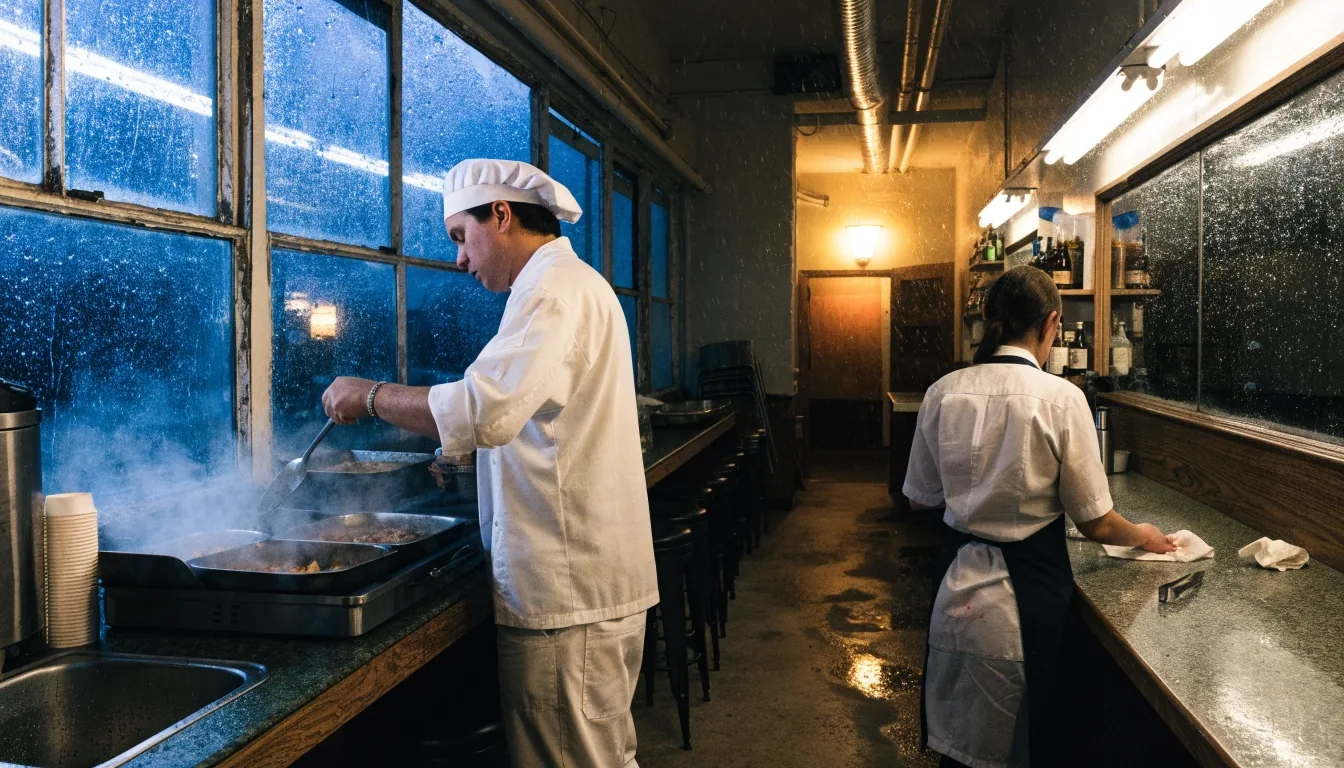
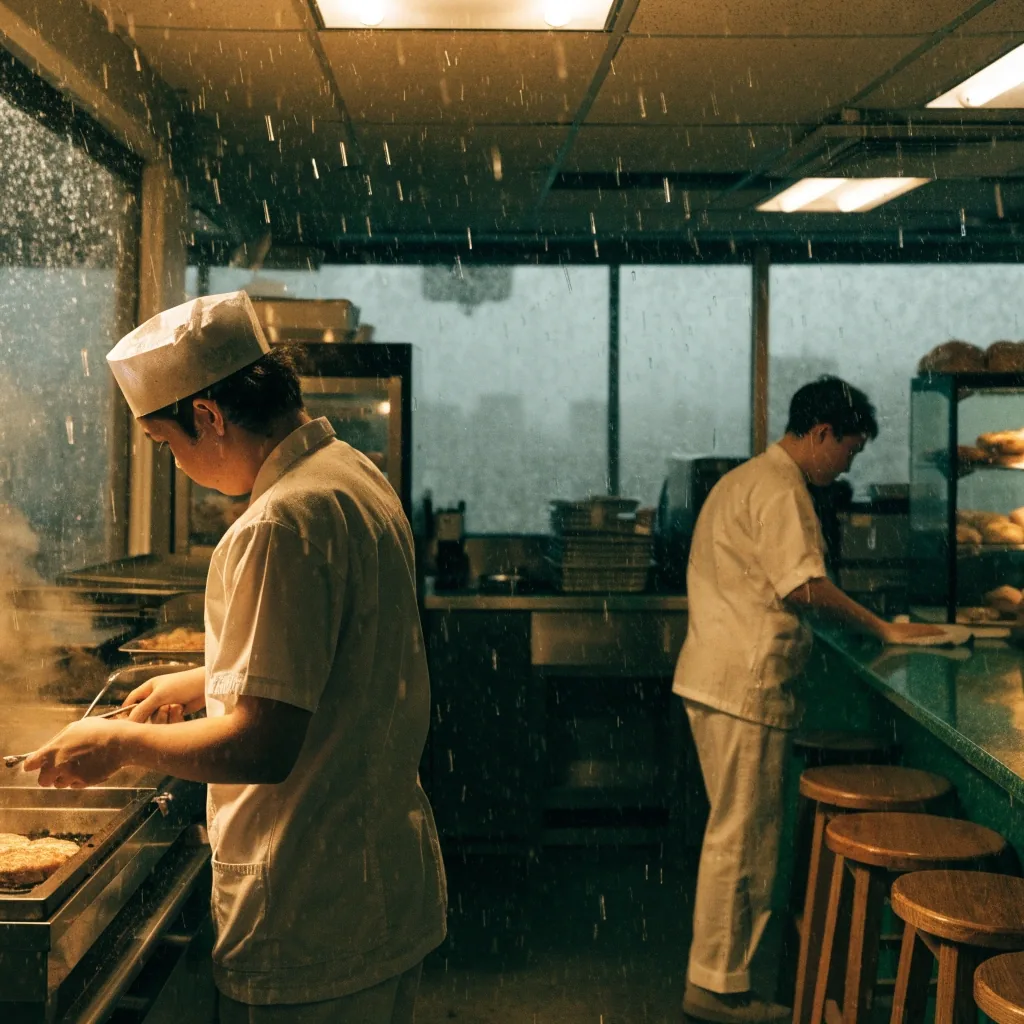
Overnight counter, storm night
Single-ink grade · counter at 3am
Reported from storm-season coverage
How the storm reputation started
The reputation comes from a simple observation: a store that stays open through a storm needs power, staff, and a working supply chain. A store that closes is usually dealing with a serious problem. Over many seasons, the chain developed a track record of reopening fast, which made its status useful as a rough read on local conditions.
News coverage picked up the pattern and repeated it, and the shorthand eventually became part of the brand's public profile. It was never designed as an official alert system, and the officials who cite it usually say so. What they are borrowing is not a measurement. They are borrowing a habit that thousands of diner shifts made true one storm at a time.
A store that stayed open was a store that still had power and staff. That is why the count started to mean something.
Three states a newsroom can actually observe from the street. Nothing here describes a region.
What a closure actually signals
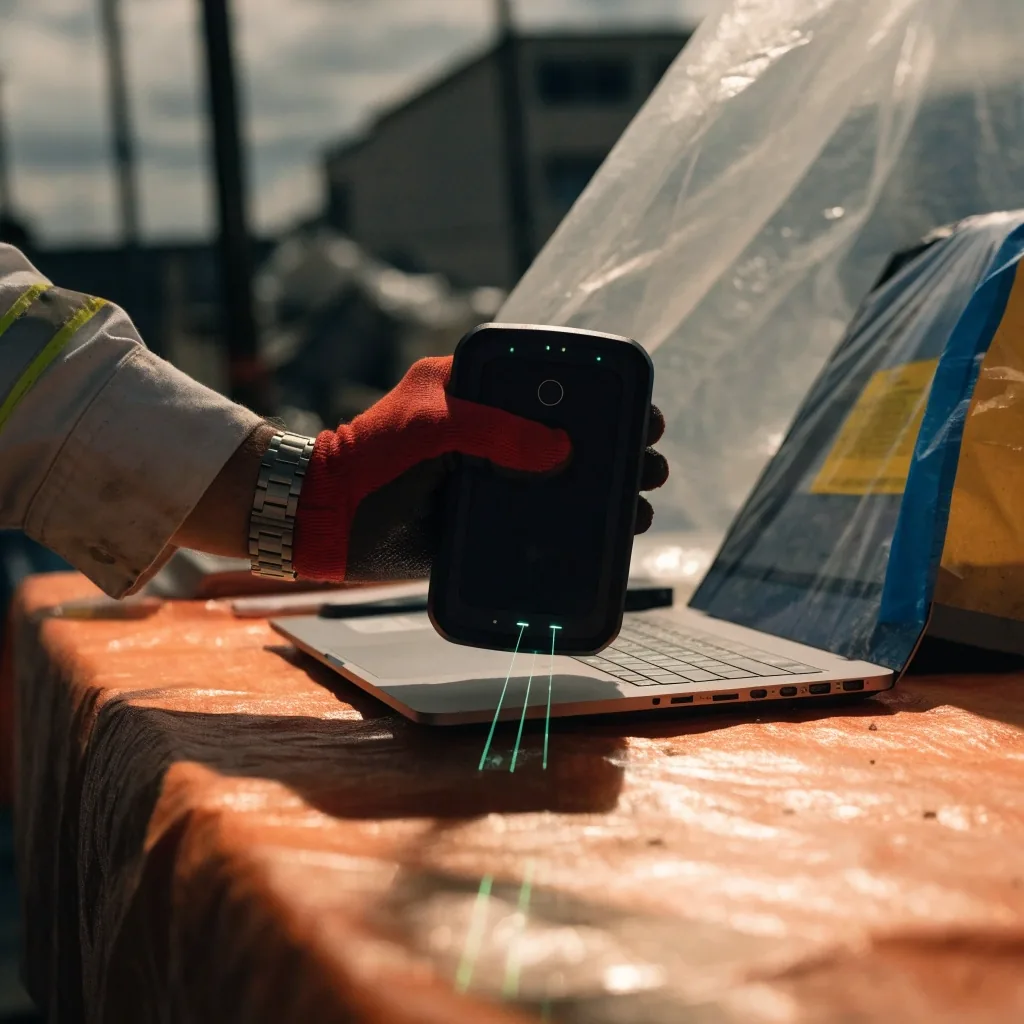
When a location closes for a storm, it generally means conditions have crossed a threshold the operator considers unsafe: flooding, evacuation orders, or loss of power and water. The closure itself does not tell you how bad things are across a whole region. It tells you that at least one functioning business decided the risk was too high.
That is useful information, but it is a single data point, not a forecast. If the nearest store is dark and the one twelve miles inland is serving coffee at 4am, the honest reading is that the storm line sits somewhere between them — and that a granular answer is going to come from an emergency bulletin, a utility outage map, and a road condition report, not from a parking lot.
Treating a closure as a definitive safety signal is a mistake the coverage sometimes encourages. It is the kind of mistake that flatters a simple story: one storefront standing in for a wind field that can span the width of a state.
Says something about
That one location, that night, and whether its power, water, and staffing held.
Says nothing about
Road closures, surge heights, evacuation zones, or how conditions will look in six hours.
Reopening as community infrastructure
After a storm, an open diner serves a practical function that goes beyond food. It gives people a place with power and a working kitchen when their own homes may still be without either. Emergency crews, utility workers, and displaced residents often end up in the same dining room, which makes the store a de facto gathering point during recovery.
That role is not unique to this chain, but the scale of its footprint and its 24-hour model make it more visible than most. Reopening quickly is partly a business decision and partly a service to the surrounding community. Both things are true at once, and both are why the reopened store shows up in local reporting long after the storm has left the forecast.
What an open dining room provides after a storm
- A lit room with working restrooms and running water.
- Hot food without a working kitchen at home.
- Outlets, ice, and a place to sit while the grid comes back.
- Word-of-mouth updates swapped between crews and neighbours.
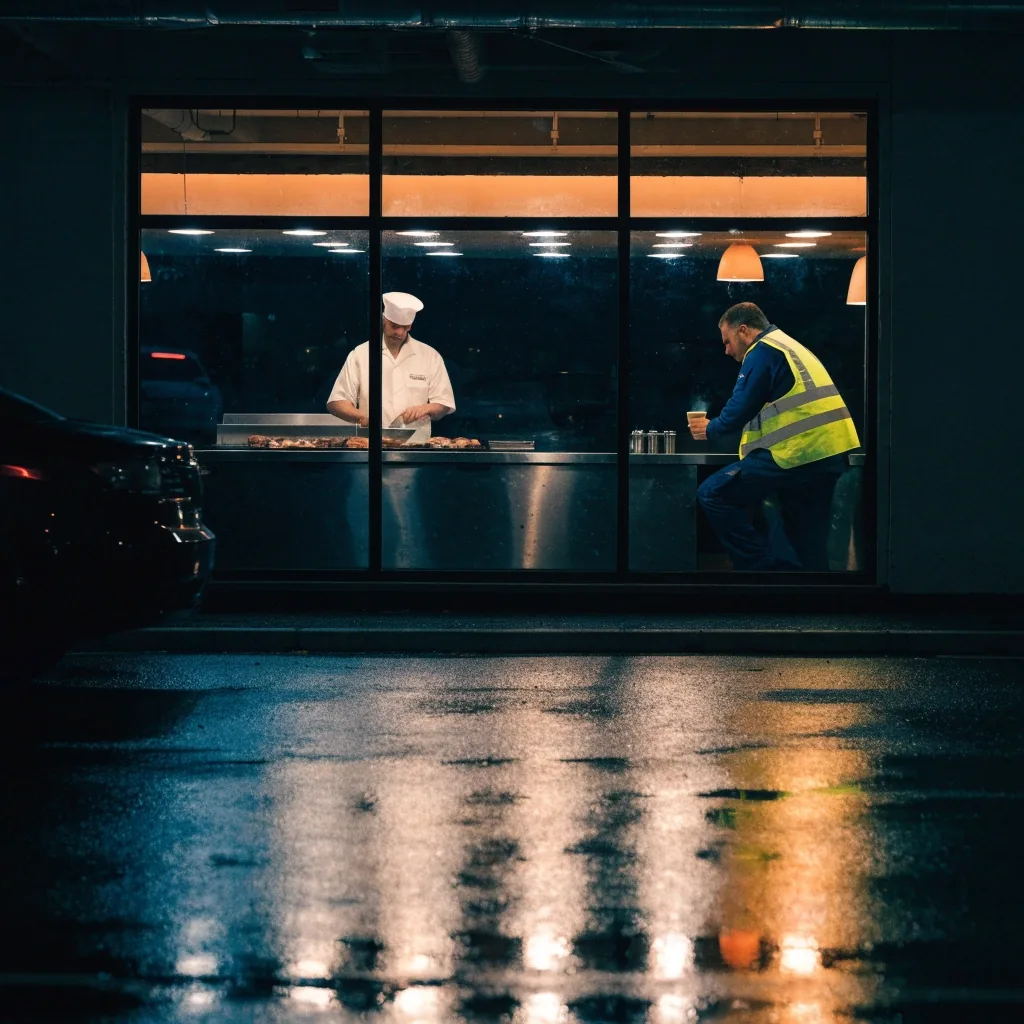
Preparedness behind the counter
Securing the building
Before landfallStorm shutters, sandbags at loading doors, and an exterior walk that will not send water toward the equipment room.
Protecting equipment
Before landfallCompressors and walk-ins are the expensive line items. Managers unplug, elevate, and photograph what sits near the floor.
Planning staff schedules
Days beforeWho can safely reach the store, who lives in an evacuation zone, and who stays home without losing a shift they cannot afford to lose.
Restocking after roads open
After the stormA usable menu depends on a truck getting through. Until it does, the kitchen works from whatever survived the outage.
Deciding to close
At the storeFranchise owners and local managers make the call with real trade-offs attached, often with incomplete information.
What differs from a normal business continuity plan is the pressure to move fast. A store that reopens early can serve a lot of people who have nowhere else to go, but it also means staff are working during a period when conditions may still be hazardous. The results vary by location and by storm.
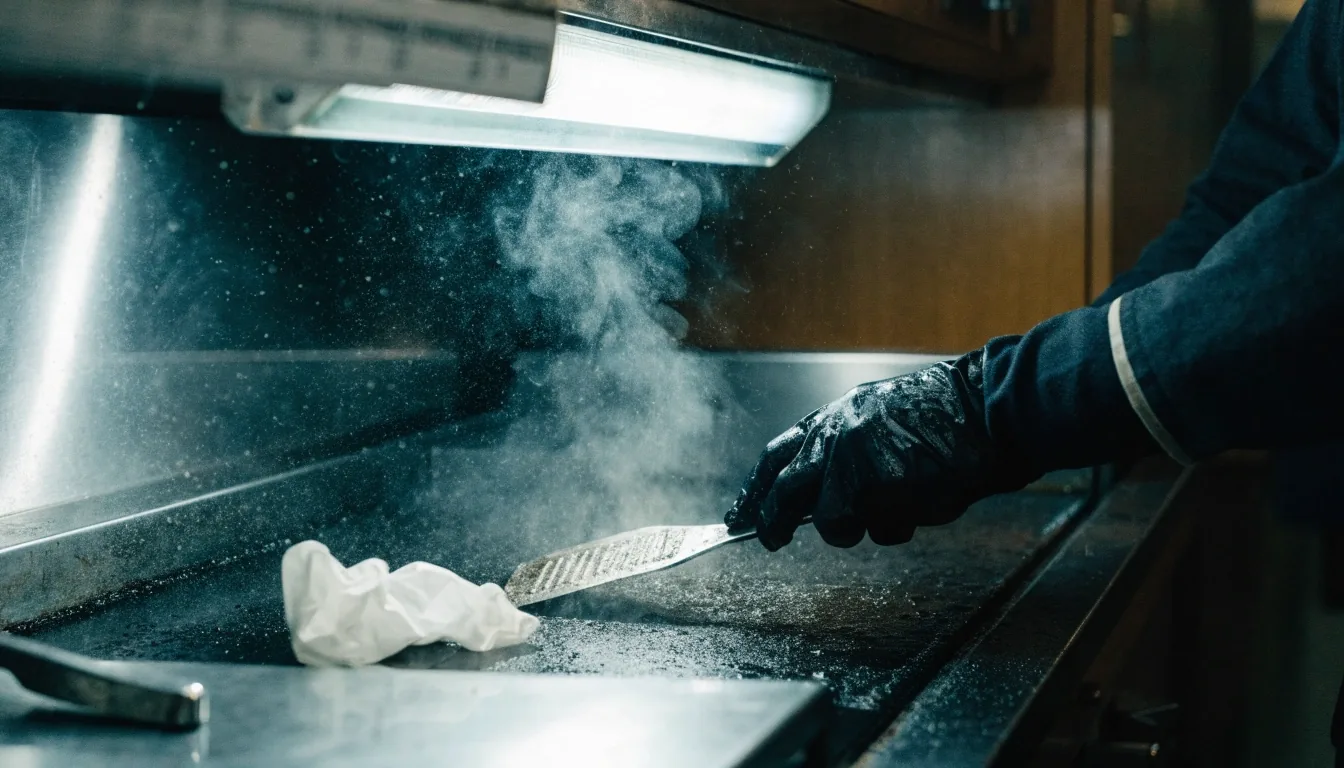
Hurricane operations in practice
In practice, hurricane operations at a restaurant mean a sequence: pre-storm shutdown decisions, post-storm damage assessment, and a gradual return to full service that depends on power, water, and staff availability. Some locations reopen within days, others take much longer, and the difference is often about infrastructure rather than the brand's intentions.
Stores that stay open through a storm tend to be outside the worst-hit area or supported by backup systems. The pattern is real, but it is driven by conditions on the ground more than by corporate policy — which is exactly why the shorthand works and also why it fails.
The sequence after landfall
- 1Assessment crew checks the roof, the walk-in, and the electrical panel before anyone clocks in.
- 2A limited menu returns first — griddle items that do not depend on the full line.
- 3Full service waits on staff who can reach the store, not on the store deciding to open.
The benchmark, and its limits
The informal benchmark gained traction because it is easy to understand and usually directionally correct. It is not a substitute for official emergency information, and it should never be treated as one. Coverage that uses the pattern usually pairs it with guidance from local authorities, which is the right approach.
Readers planning around a storm should follow evacuation orders and emergency bulletins first and treat the diner pattern as commentary, not instruction. That distinction matters, and it is easy to lose in a viral post where a photo of a dark parking lot travels faster than the wind field that produced it.
How to read storm coverage of the chain
If you see a headline using the diner benchmark during a storm, check whether it cites any official source alongside it. Coverage that only leans on the pattern is usually thin. The more useful reporting pairs store status with local emergency information, power outage data, and road conditions.
We follow that approach in our own storm season coverage, and we avoid repeating the benchmark as if it were a government measurement. It is a habit of coverage, and habits are not standards.
Questions we get every hurricane season
Why is Waffle House used as a storm indicator?
Because its stores have a long record of staying open or reopening quickly after severe weather, and newsrooms began using that status as a rough signal of how badly an area was affected. It is an informal habit, not an official measure.
Does a closure mean the area is in serious danger?
Generally it means conditions crossed a threshold the operator considered unsafe for that specific location. It is useful information, but it does not describe the whole region and should not replace official emergency guidance.
Do all locations close during hurricanes?
No. Some stay open when conditions allow, while others close or reopen at different speeds depending on damage, power, water, and staffing. The pattern varies by storm and by store.
Tell us what you saw when it reopened
We collect reports from people who were there — crews, staff, and neighbours who watched a store come back. Email us what happened, which location, and what made the difference that week. We read every note and follow up before we publish.
Quibla Delivery — Waffle House Culture Blog · 1402 Terry Ave, Seattle, WA 98101, USA · info@quibla.delivery · +12066822661 · Monday to Friday, 9:00 AM – 6:00 PM
Where Quibla Delivery is registered