
Inside the Waffle House menu and its all-day breakfast
The menu is the part of this chain that most people encounter first, and it is also the part that is easiest to misread from the outside. It looks simple. It is not. A short list of items runs on the same schedule all day, with modifiers that regulars learn and cooks call out in shorthand.
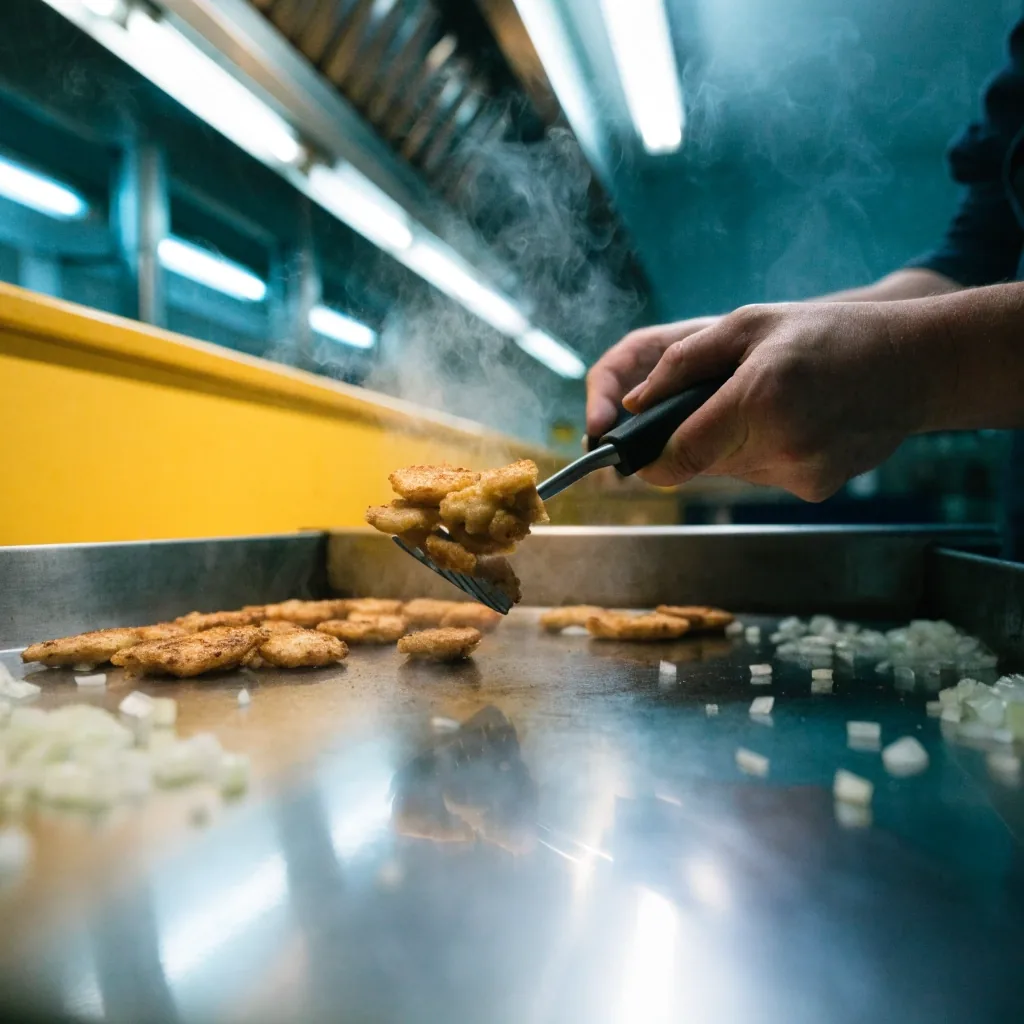
Cooked to order, never held under a lamp
Breakfast is the whole day
All-day breakfast is the defining feature of the menu. It means a customer at 7 a.m. and a customer at 11 p.m. order from the same board, and the kitchen does not switch modes between services. That flexibility supports both morning traffic and the late-night crowd that arrives after a shift or a game.
In practice, it also simplifies the back of house: one set of ingredients, one grill workflow, and one rhythm for the cooks. When restaurant analysts talk about why the format has lasted, this operational consistency is usually the reason, not nostalgia.
For a reader following the chain from the outside, the practical result is simpler than a conventional diner. There is no breakfast window that closes, no lunch board that appears at eleven, and no dinner service with its own ingredients to prep. A server at 3 a.m. works from the same printed list as the server who opened the doors.
The menu in one paragraph
A short list of breakfast and diner staples, served on one schedule from opening to close. The variables customers control are the modifiers, not the hours — which toppings, which drink, and how the potatoes come off the grill.
- Waffle plain or with standard additions
- Hash browns scattered or pressed
- Eggs any way, any hour
Hash browns and the language around them
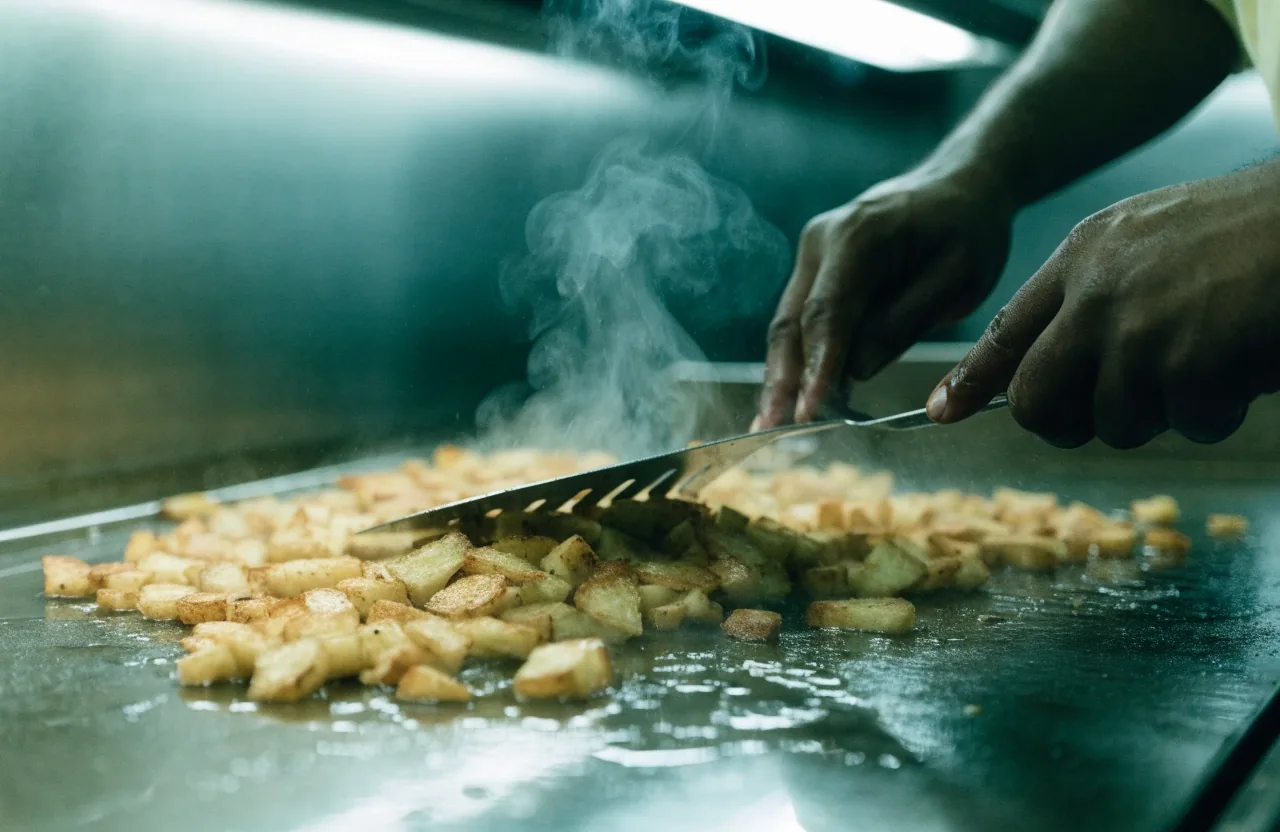
Hash browns are the item most associated with the chain, and they come with a working vocabulary. The words are printed on the menu, so they belong to customers as much as to staff. Say the ones you want; the cook sorts out the order.
Regulars stack these words in a fixed order because it matches the sequence the cook works. If you are new, say the words you want in any order. The cook will sort it out, and the result is the same pile of potatoes with your toppings worked in. Nothing about the dish changes based on how confidently you ordered it.
Local practice varies slightly on what each word includes. Some cooks treat covered as cheese only; others add a second topping when someone asks for it by name. Ask the server if a combination is unclear — that is a normal question at the counter.
Order shorthand and counter service
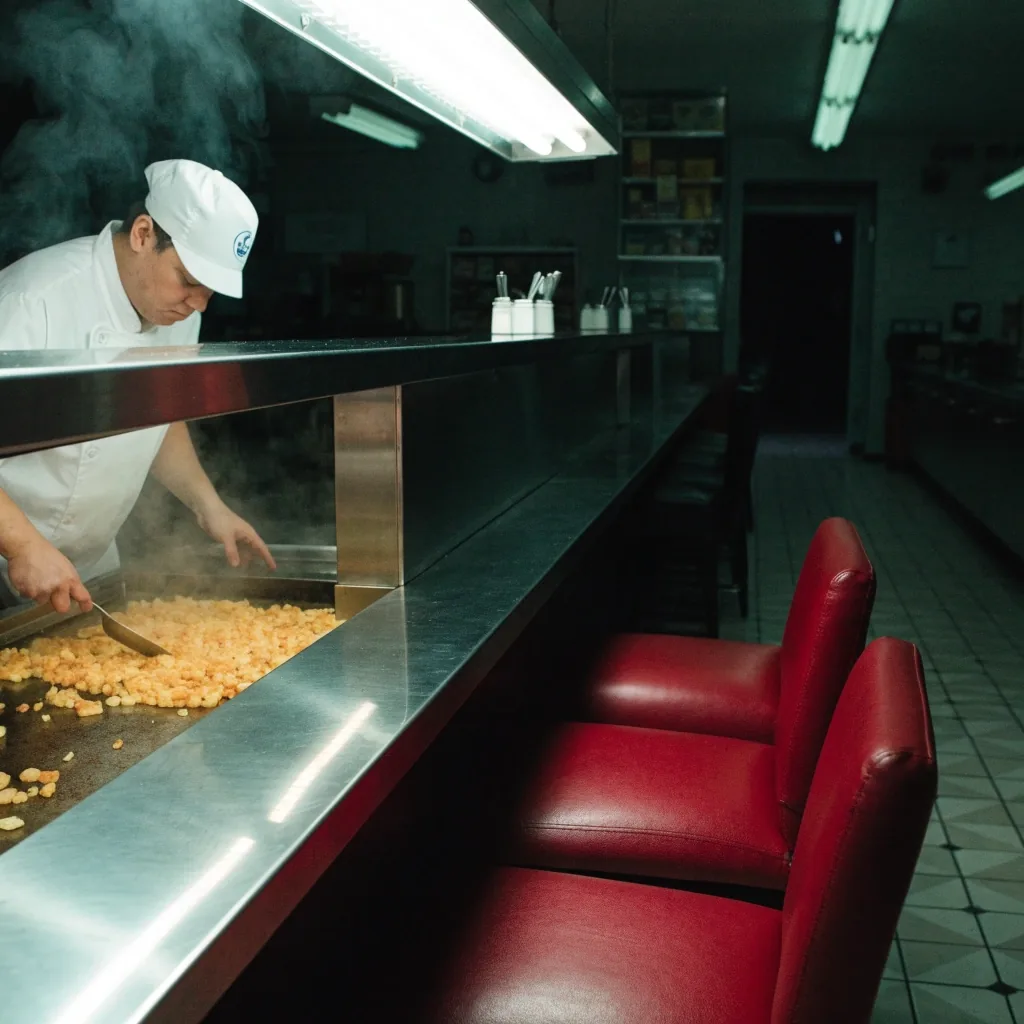
Counter service is where the shorthand becomes visible. A server calls the order, and a cook marks it on a ticket or answers verbally. Regulars learn the cadence quickly because the same phrases repeat every visit.
Phrases that repeat every visit
None of this is private staff slang. The terms are printed on the menu and used by customers, so a first-timer can build the vocabulary in one meal. What regulars actually learn is the rhythm — when a ticket gets called, how fast a plate lands, and which part of the counter is the fastest place to sit.
The words are on the menu. That is what makes the counter easy to join.
Other restaurants keep their shorthand behind the pass. Here it sits in plain print, so the gap between a regular and a first-timer closes fast. Learning the words is the whole initiation.
The waffle itself
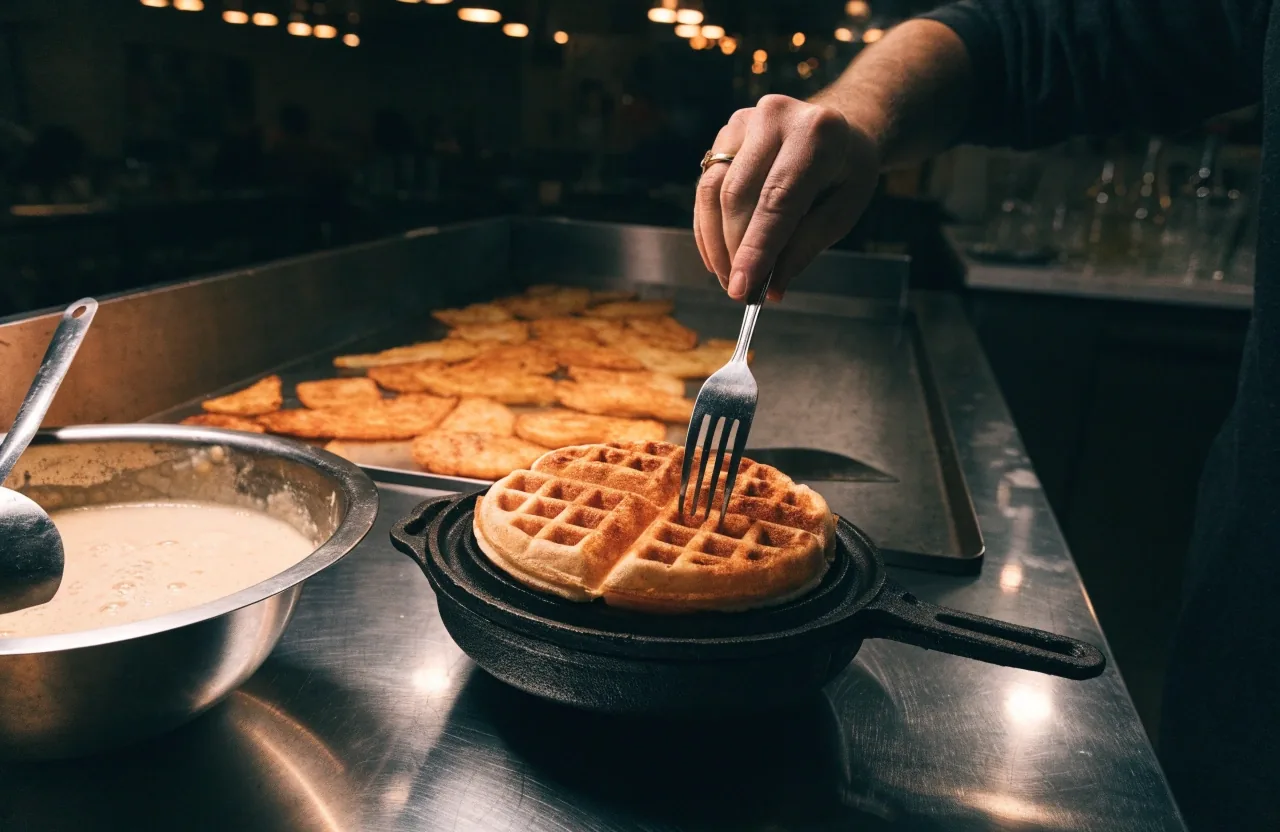
The waffle is the anchor item and the one the brand is named for. It is served plain or with a small set of standard additions, and it is cooked to order rather than held under a lamp. Because the batter is the same all day, the quality bar is a matter of grill timing and temperature more than recipe variation.
That is why regulars tend to judge a location by the waffle first. If the waffle is right, the rest of the meal usually follows. If it comes out pale or sits before it reaches the table, the grill is running behind and the whole ticket will feel it.
Standard additions stay short on purpose. The point is a consistent waffle, not a rotating flavor menu, and the same promise holds whether you order it at the start of the day or near the end of a shift.
What the menu does not include
The menu is deliberately narrow. It does not chase seasonal specials or trend items, and it does not expand into a broad lunch and dinner menu the way many diners do. That restraint keeps the kitchen fast and the prices predictable, and it means the handful of items that do exist get a lot of repetition.
For readers who follow restaurant menus as business documents, this is a useful case study in doing less and doing it consistently. A short list is cheaper to train against, easier to stock, and harder to get wrong at 4 a.m. when the staff is running on a long shift.
The trade-off is honest: the format offers little for someone who wants variety. If you arrive hoping for a rotating special or a dish built around a trend, the board will feel limited. It is built for the person who wants the same reliable plate at an unpredictable hour.
Kept short
A stable list of staples means no ingredient churn and no retraining between seasons.
Left out
Seasonal specials, trend items, and a broad lunch board are all outside the format.
The cost
Regulars get consistency; anyone hunting for variety will find the list short.
Regional variation and franchise practice
Most locations run the same core menu, but franchise practice allows for small local differences in hours, staffing, and the exact flow of a shift. A store near a highway may lean harder into overnight traffic than one in a residential area. These variations rarely change the items themselves, but they change what the counter feels like at 2 a.m. versus 8 a.m.
Readers planning a first visit should expect the menu to be familiar and the atmosphere to be location-specific. The waffle your neighbor orders at a suburban store and the waffle served off an interstate exit come off the same recipe; the room around them does not.
Breakfast items are cheap to stock and fast to prepare, which matters when a restaurant serves around the clock. The menu needs no seasonal resets and no separate lunch line. That structure keeps the operation lean and keeps the brand recognizable in any market.
It also gives the chain a stable identity that survives leadership changes and commodity shocks, which is why the menu is the part of the business that changes least over time. If anything, the pressure to change comes from ingredient prices rather than customer demand.
How to order like a regular on a first visit
Start simple
One waffle and one order of hash browns. Pick your modifiers from what you actually like, not from what sounds authentic to the room.
Read the room
If you drink coffee, order it early — refills come fast at the counter. The ticket calls tell you how the kitchen is running, which is often more informative than the board.
Ask locally
Ask the server what the store is known for. The answer is often a topping combination or a specific cook's specialty that never appears in print.
Questions readers send in
The four we get most often about the menu, the broth of the format, and what a first visit actually looks like.
Is the breakfast menu really available all day?
Yes. The kitchen serves the same core items from opening to close, which is why the format is called all-day breakfast. Availability of specific items can still depend on what a store has in stock on a given shift.
What does scattered, smothered, and covered mean exactly?
Scattered means the hash browns are spread on the grill. Smothered adds onions. Covered adds cheese. You can order any combination, and the terms are printed on the menu for customers to use.
Is there a lunch or dinner menu?
The menu stays focused on breakfast and diner staples rather than switching to a separate lunch or dinner board. This is one of the reasons the operation runs fast around the clock.
Do all locations serve the same items?
The core menu is consistent, but franchise practice allows small local differences in hours and operations. The atmosphere often varies more than the food.
Quibla Delivery publishes reader guides to Waffle House culture from 1402 Terry Ave, Seattle, WA 98101. We answer mail Monday to Friday, 9:00 AM – 6:00 PM, by phone at +12066822661 or by email at info@quibla.delivery. Steady questions this year have been about all-day breakfast, hash browns served scattered and smothered, and the shorthand regulars use at the counter.